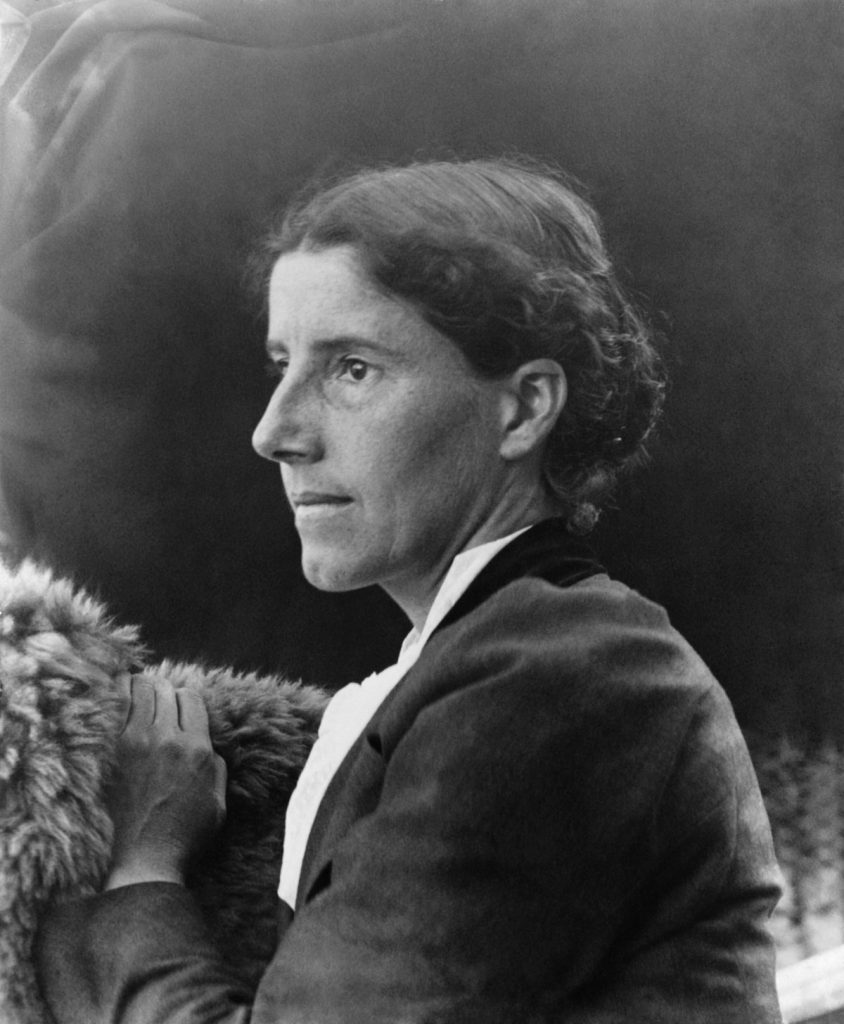
Charlotte Perkins Gilman: The Mind Behind “The Yellow Wallpaper”
Charlotte Anna Perkins Gilman (July 3, 1860 – August 17, 1935) is remembered first for a short story that still startles new readers: “The Yellow Wallpaper,” published in The New England Magazine in January 1892. The tale of a young wife confined to a nursery by a well-meaning physician husband, forbidden to work, and slowly undone by the patterned paper on the walls, has become a fixture of American literature courses, feminist criticism, and horror anthologies alike. Gilman herself insisted she did not write it to drive people mad, but “to save people from being driven crazy.” That purpose, and the life behind it, make her one of the essential classic authors of the late nineteenth and early twentieth centuries.
She was more than one famous story. Gilman was a novelist, poet, magazine editor, lecturer, early sociologist, and a leading American advocate for women’s economic independence. Women and Economics (1898) made her an international theorist of the women’s movement. The utopian novel Herland (1915) imagined a society of women without men. For seven years she wrote and edited her own monthly, The Forerunner. To meet her only through the yellow room is to miss the scale of the career that produced it.
Hartford, Providence, and an Irregular Education
Gilman was born Charlotte Anna Perkins in Hartford, Connecticut, into a family that included, on her father’s side, connections to the Beecher clan of reformers and writers. Her father, Frederic Beecher Perkins, largely abandoned the household during her infancy. She and her brother grew up in poverty with a mother, Mary Fitch Westcott Perkins, who discouraged close friendships and forbade fiction. Support came partly from aunts, among them the suffragist Isabella Beecher Hooker and Harriet Beecher Stowe. Distant correspondence with her father brought reading lists in history, anthropology, and science.
Much of her youth was spent in Providence, Rhode Island. Her formal schooling was erratic: seven schools totaling about four years, ending at fifteen. Teachers found her intelligent and poorly fitted to the classroom. She educated herself in public libraries, favoring what was then called natural philosophy. In 1878, with help from her absent father, she enrolled at the Rhode Island School of Design, supported herself designing trade cards, tutored, and painted. Around 1879 she formed a close, loving friendship with Martha Luther that she later described as love without sex; Luther’s marriage in 1881 devastated her.
Marriage, Rest Cure, and the Making of a Story
In 1884 she married the artist Charles Walter Stetson. Their daughter, Katharine Beecher Stetson, was born in 1885. Gilman suffered severe postpartum depression. Under the care of the celebrated neurologist Dr. Silas Weir Mitchell, she underwent the “rest cure”: enforced domestic quiet, limited intellectual life, and an order, as she later recalled, never to touch pen, brush, or pencil again. She tried to obey. Her condition worsened. Her husband’s diaries record talk of pistols and chloroform. She came, in her own words, so near utter mental ruin that she could see over the edge.
She broke the regimen, returned to work, and later framed that choice as the beginning of recovery. In June 1890, in Pasadena, she wrote “The Yellow Wallpaper” in two days. It appeared in The New England Magazine in January 1892. The narrator, suffering what her husband calls a temporary nervous depression, is confined upstairs, barred from writing, and left with nothing to study but the wallpaper. The pattern becomes a woman behind bars. The ending, in which the narrator creeps the room’s perimeter while her husband faints, remains one of American fiction’s most debated closures: breakdown, rebellion, or both.
Gilman sent Mitchell a copy. She later claimed the story changed his methods; historians such as Julie Bates Dock have questioned that claim, noting that Mitchell continued to promote rest-cure practice years afterward. What is not in dispute is Gilman’s stated aim, published in The Forerunner in 1913 as “Why I Wrote the Yellow Wallpaper?”: fiction as warning and rescue. Early reception was mixed. Some readers found the story dangerous or painful; others praised its graphic account of how confined, monotonous lives could tip into illness. H. P. Lovecraft later ranked it among classic delineations of madness. Feminist critics from the 1970s onward restored it to the center of the curriculum as a critique of medical authority, the domestic sphere, and the silencing of women’s speech. It remains, according to the Feminist Press, that press’s all-time bestselling title.
California, Divorce, and a Public Voice
In 1888 Gilman separated from Stetson (rare for the era) and moved to Pasadena with her daughter, living with friend Grace Ellery Channing. The divorce became final in 1894; Stetson married Channing, and Gilman, who supported progressive views of paternal rights, later sent Katharine to live with them, writing that the “second mother” was fully as good as the first. Scandal followed her in the press. She answered by becoming a public intellectual.
In California she organized, lectured, and wrote. She represented the state at the 1896 National American Woman Suffrage Association convention and at the International Socialist and Labor Congress in London. Her satirical poem “Similar Cases” and the 1893 poetry volume In This Our World built her reputation. She edited the short-lived Impress for the Pacific Coast Women’s Press Association. Lecture tours on labor, ethics, human rights, and women’s place became both income and platform. A stay at Jane Addams’s Hull House in Chicago sharpened her reform networks.
Women and Economics and the Theory of Independence
Women and Economics (1898) made Gilman internationally famous and was translated into multiple languages. She argued that women’s economic dependence on marriage deformed both private life and social evolution; that motherhood should not preclude work outside the home; and that cooking, housekeeping, and child care should be professionalized rather than treated as unpaid female destiny. “There is no female mind,” she wrote. “The brain is not an organ of sex.” Follow-up books such as Concerning Children (1900), The Home: Its Work and Influence (1903), Human Work (1904), and The Man-Made World; or, Our Androcentric Culture (1911) extended the case: redesign the home, share domestic labor, and stop mistaking patriarchal custom for nature. She is now often counted among the “women founders” of American sociology and was a member of the American Sociological Association from its founding in 1905 until her death.
In 1900 she married her cousin, Wall Street attorney Houghton Gilman. They lived in New York until 1922, then at his homestead in Norwich, Connecticut. After his sudden death in 1934, she returned to Pasadena to be near her daughter.
The Forerunner, Herland, and Utopian Fiction
From 1909 to 1916 Gilman single-handedly wrote and edited The Forerunner, eighty-six issues of nearly twenty-eight pages each, aimed at stimulating thought rather than sensation. In its pages she serialized novels including What Diantha Did, The Crux, Moving the Mountain, Herland, and With Her in Ourland. Herland remains her best-known longer fiction: an all-female utopia discovered by male explorers, organized around cooperative motherhood and rational social design. Together with the shorter fiction and verse, the magazine stands as one of the major sustained literary achievements of her career.
A Complicated Legacy
Gilman’s feminism was of her time as well as ahead of it. Scholars have documented racialist and eugenicist strains in her thought, including the 1908 essay “A Suggestion on the Negro Problem” and later anxiety about immigration and “Anglo-Saxon” identity. Critics such as Susan S. Lanser have argued that even “The Yellow Wallpaper” can be read against the era’s racial discourse. A full account of Gilman neither erases those views nor lets them cancel the force of her critique of medical paternalism and economic dependence. She belongs to American letters as a powerful, uneven, historically situated reformer.
In January 1932 she was diagnosed with incurable breast cancer. An advocate of euthanasia for the terminally ill, she died by chloroform overdose on August 17, 1935, writing that she “chose chloroform over cancer.” Her autobiography, The Living of Charlotte Perkins Gilman, appeared the same year. She was inducted into the National Women’s Hall of Fame in 1994.
How to Read Her
Begin with “The Yellow Wallpaper” in a reliable text that preserves the marriage line many anthologies once cut. Read Gilman’s own “Why I Wrote the Yellow Wallpaper?” for her intended use of the story. Then move outward: Women and Economics for the theory; Herland for the utopian imagination; a selection from The Forerunner fiction for the breadth of her magazine voice. What holds the work together is a single pressure: the belief that human beings, women included, need meaningful work, mental freedom, and economic standing if they are to remain whole.
That is why the yellow room still matters. It is not only a gothic chamber. It is a diagnosis of what happens when care becomes control, when rest becomes erasure, and when a woman is told that her mind is the disease. Charlotte Perkins Gilman wrote her way out of that room, then spent a lifetime arguing that no one else should have to wallpaper their way to sanity.
Sources
- Wikipedia: Charlotte Perkins Gilman
- Wikipedia: The Yellow Wallpaper
- Encyclopædia Britannica: Charlotte Perkins Gilman (via archive / Britannica summary)
- Gilman, Charlotte Perkins. “Why I Wrote the Yellow Wallpaper?” The Forerunner, October 1913. (Reprinted widely; see e.g. Cambridge / Bauer editions.)
- Gilman, Charlotte Perkins. The Living of Charlotte Perkins Gilman: An Autobiography. 1935.
- Harvard Schlesinger Library: Charlotte Perkins Gilman Collections
- Dock, Julie Bates. Charlotte Perkins Gilman’s “The Yellow Wall-Paper” and the History of Its Publication and Reception. Pennsylvania State University Press, 1998. (Cited via Wikipedia.)
- Lovecraft, H. P. “Supernatural Horror in Literature.” 1927. (Cited via Wikipedia on “The Yellow Wallpaper.”)