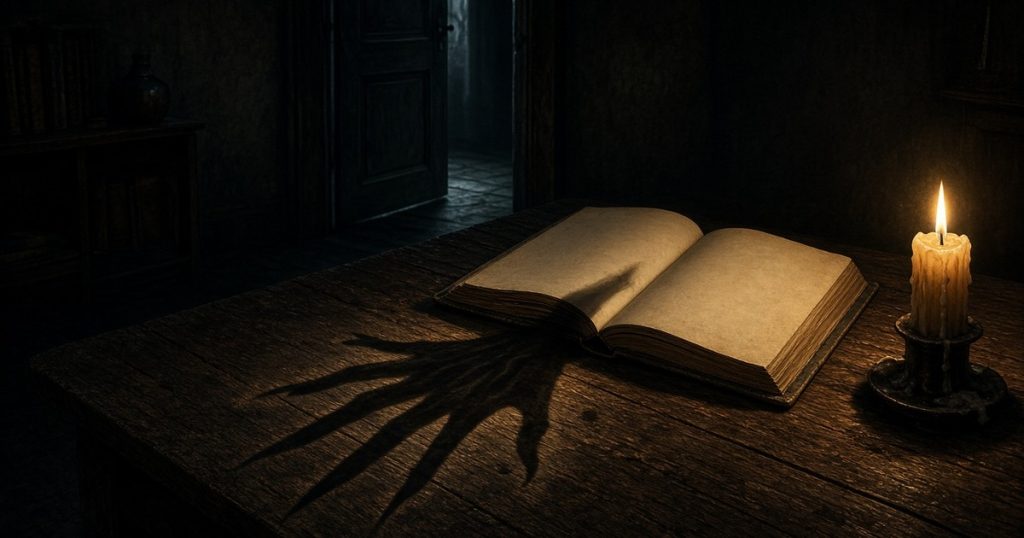
How to End a Horror Story: Endings That Keep Scaring After the Last Line
It’s almost Halloween, which means a lot of you are sitting on a horror story with a great opening, a creepy middle, and an ending that just sort of stops. Knowing how to end a horror story is the difference between a reader who shrugs and turns the page and a reader who checks the locks before bed.
Here’s the short answer. A good horror ending does not resolve the fear. It relocates it. The monster leaves the page and moves into the reader’s head. Everything below is about how to make that move happen on purpose.
What Makes Horror Story Endings Different
In most genres, the ending pays off the plot. In horror, the ending pays off the dread. Your reader has spent the whole story waiting for something awful. If the last page closes every door and switches on every light, you’ve let all the air out of the balloon.
That doesn’t mean every horror ending has to be hopeless. It means the ending has to leave a residue. Something stays wrong. Something follows the reader out of the story.
Four Horror Story Endings That Work
Most strong horror endings fall into one of four families. You can mix them, but know which one you’re aiming for before you start revising.
1. The Bleak Ending
The protagonist loses. The thing wins. Nobody comes to help. This works when the story has been honest from the start about how big the threat is. Shirley Jackson’s “The Lottery” is the classic example: the reveal at the end is not a twist so much as the town showing you exactly who it has been all along.
Bleak endings fail when they feel like punishment for no reason. The loss has to be the logical end of choices the characters made, or of a world the reader already understood.
2. The Ambiguous Ending
You stop one beat before the answer. W. W. Jacobs did this in “The Monkey’s Paw”: the knocking stops, the door opens on an empty road, and you never learn what was standing outside. Readers have argued about it for over a century. That’s the goal.
Ambiguity is not the same as confusion. The reader should know exactly what the two (or three) possibilities are. They just don’t get to know which one is true.
3. False Safety, or the Twist That Reframes
The hero escapes, the sun comes up, the family drives away. Then one small detail tells the reader the danger came along for the ride.
Example: A woman survives a night in a haunted farmhouse, gets to her sister’s apartment, and finally sleeps. The last line: “She didn’t remember bringing the rocking chair.”
A twist ending works when it changes the meaning of what came before. If the reader can’t look back and see the clues, it’s not a twist. It’s a cheat. The original ending of A Nightmare on Elm Street is an excellent example. You thought it was over? Psyche!
4. Survival With a Cost
The protagonist lives, but something was taken. A hand, a child, a memory, their sanity, their faith in other people. This is the most humane horror ending, and it’s often the most disturbing because the reader has to imagine living with the damage.
Example: A night-shift nurse beats the thing in the basement morgue. She keeps her job. She also can no longer stand to be in a room with the lights off, and her husband has started sleeping on the couch.
Writing Horror Endings Starts on Page One
You can’t bolt a good ending onto a story at the end. Writing horror endings is mostly about setup.
- Plant the rule early. If the curse has a condition, show it in the first act. The ending then becomes the rule coming due, which feels inevitable instead of random.
- Plant the object. That rocking chair in my illustration above only works if the reader saw it on page two and thought nothing of it.
- Start the clock. A deadline gives the ending something to hit. I wrote about this in Creating Tension with a Ticking Clock. In horror, the clock can be sunset, the tide, or the third night in the house.
- Know your monster’s motive. Even if the reader never learns it, you need to. A monster that follows its own rules produces an ending that makes sense. See my post on villains for how to build that “why” before you write.
A good test: read only your first page and your last page. They should feel like they belong to the same story. If the last page introduces a brand-new threat, it probably doesn’t.
What to Leave Unexplained
This is where a lot of horror drafts go wrong. In the last few paragraphs, they panic and start explaining. The origin of the curse. The name of the demon. The ancient tribe. The science.
Every explanation shrinks the monster. Once the reader understands something, they can stop being afraid of it.
Explain enough that the ending is fair:
- The reader should understand the rules well enough to see the ending coming in hindsight.
- The reader should know what’s at stake.
Leave unexplained:
- Where the thing comes from.
- What it actually looks like, in full.
- Whether it can be stopped for good.
Think of it like a dark basement. Show the reader the top three stairs. Let them imagine the rest.
Note that you can start playing with this section when you’re well-versed in writing this kind of story. Know the rules well, then you can start to break them.
Last-Line Resonance
The last line of a horror story carries more weight than any other sentence you’ll write. Back in 2016 I wrote a whole piece for The Fictorians called “The Last Line.” The short version of how I think about it now: the final sentence should land like a door closing behind the reader.
A few things that help:
- End on a concrete image, not a feeling. “She was terrified” is dead on arrival. “The baby monitor kept breathing after she unplugged it” sticks. (That’s another invented illustration.) This is show-don’t-tell at its most important. If you need a refresher, read Show, Don’t Tell: Huh?
- Make it short. A long final sentence lets the tension drain out between clauses.
- Echo the opening. Repeat an image or phrase from the first paragraph with its meaning flipped. Readers feel the circle close.
- Cut the epilogue line. Many drafts have one sentence too many. Look at your last two lines. Try deleting the final one. Often the story ends better a beat earlier.
Pitfalls That Kill Horror Endings
“It Was All a Dream”
The cardinal sin. If nothing happened, the reader wasted their time and so did the characters. The only time a dream reveal works is when it makes things worse, such as waking into a reality that is more frightening than the nightmare. If you’re an olde phart like me, on the TV show Dallas, they undid a whole season with Bobby in the shower because everything was a dream. It killed the franchise.
Over-Explaining the Monster
Covered above, but it’s the most common problem I see, so it gets its own heading. A three-paragraph lecture from a professor in the final scene is a sign the writer didn’t trust the reader.
The Sudden Rescue
The cavalry arrives. The priest shows up. A character we never met fixes everything. This drains every bit of dread you built. If the protagonist survives, it should be through their own effort, and it should cost them.
The Random Twist
A twist with no setup is just noise. If you can’t point to three earlier moments that support it, rework it or cut it.
A Quick Revision Checklist
Before you send that story out this Halloween season:
- Can you name which type of ending you wrote?
- Is the ending set up on the first page or two?
- Did you explain only what the reader needs to understand the ending?
- Is the last line a concrete image?
- Did you try cutting the last sentence?
I care a lot about short horror. My collection Odd Places (listed with the rest of my work on my bibliography page) is full of short horror and speculative pieces where the ending had to do a lot of work in very little space. Short fiction is unforgiving that way. You don’t have room for a weak ending, so every word in the last paragraph has to earn its place. Next month I’ll have more on short speculative fiction, so watch for that.
Now go finish that story. Then turn off the lights and see if it still works.
FAQ: How to End a Horror Story
What is the best way to end a horror story?
There’s no single best way, but the strongest horror story endings leave the fear unresolved. Pick one ending type (bleak, ambiguous, false safety, or survival with a cost), set it up from the first page, and finish on a concrete image.
Should a horror story have a happy ending?
It can, as long as the happiness has a price. A survivor who pays a real cost keeps the story in horror territory. A clean, costless victory usually turns it into an adventure story.
How do you write an ambiguous horror ending without confusing readers?
Make the possible answers clear and withhold only the final answer. The reader should be able to say “it’s either this or that.” If they can’t say what the options are, you’ve written confusion, not ambiguity.
Why is “it was all a dream” a bad ending?
It erases the stakes. Everything the characters suffered stops mattering, and readers feel tricked. If you use a dream at all, make waking up worse than the dream.